
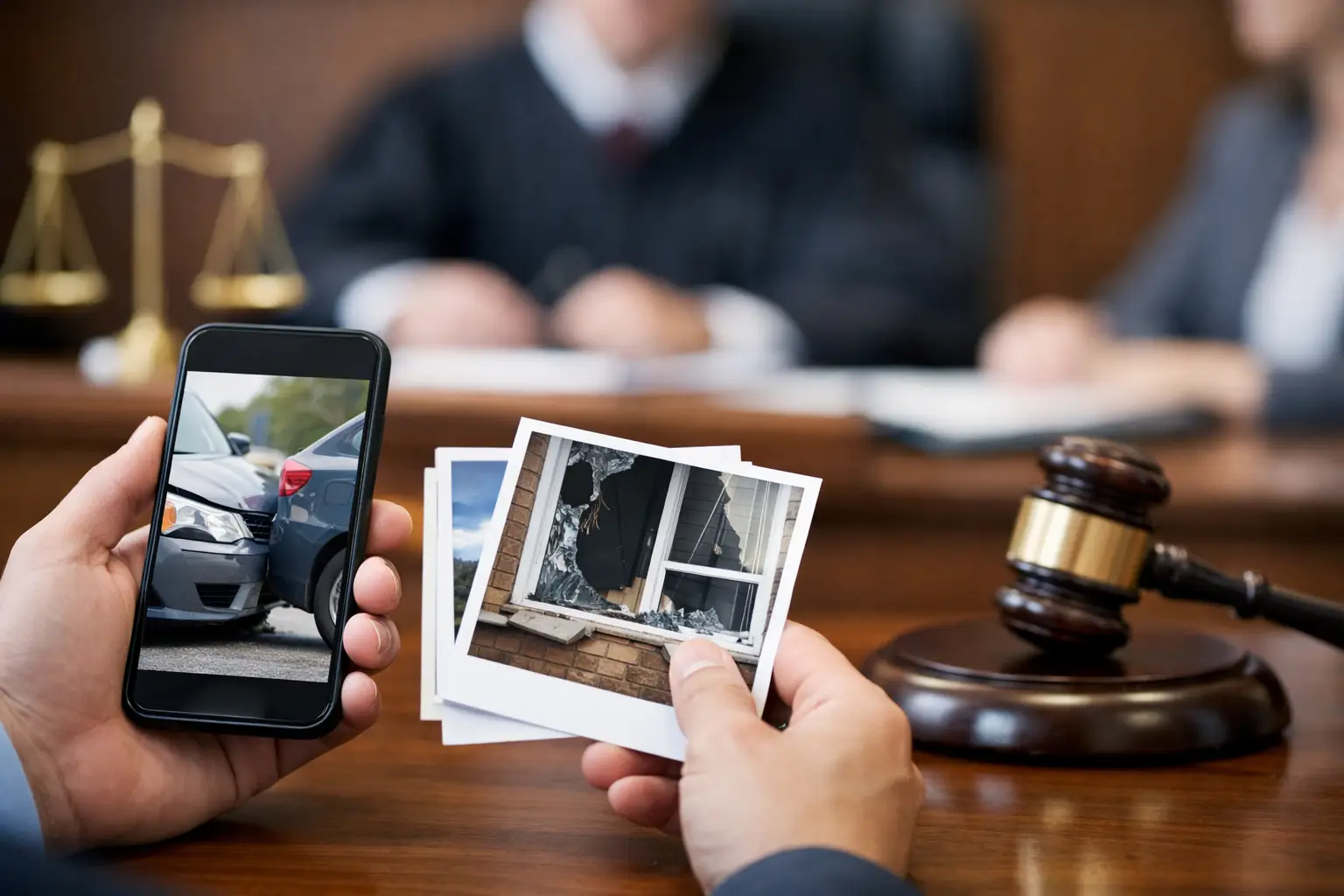
A photo of a damaged apartment, unfinished repair, delivered item, or text-message screen can be powerful proof. But a judge will not automatically accept it just because it is on your phone. The real question behind “can photos be evidence in small claims” is whether you can show what the image depicts, when it was taken, and why it matters to the money you are asking for.
For most small claims cases, photos can absolutely be evidence. Used well, they make your story easier to understand in a few seconds. Used poorly, they can look incomplete, edited, unrelated, or impossible to verify. Your goal is simple: give the judge clear, organized proof that supports each part of your claim.
When photos help prove a small claims case
Photos are most useful when they document a condition, event, item, or communication that would otherwise depend on one person’s word against another’s. If a contractor left work unfinished, pictures can show the missing materials, uneven installation, or damage. If a tenant damaged property, before-and-after photos can help establish the change in condition. If someone received goods but did not pay, delivery photos may support your invoice, order confirmation, and messages.
A photograph is usually strongest when it works with other evidence. Think of your case as a chain: the agreement explains what was supposed to happen, the photos show what actually happened, and invoices, receipts, estimates, or messages show your financial loss and attempts to resolve it.
For example, a photo of a broken fence does not by itself prove who caused the damage or what a reasonable repair costs. Pair it with a dated message from the other party admitting the incident, a repair estimate, and a paid invoice if the work is already complete. That is a much more convincing case.
What makes a photo credible in court
Small claims judges generally want evidence that is relevant and reliable. You do not need to use legal jargon or create a perfect courtroom exhibit, but you do need to be ready to explain the basics.
You can identify the photo
Be prepared to say what the photo shows, where it was taken, and how you know. If it is a picture of your rental unit, explain that you took it at the property on a specific date. If it is a photo sent by the other party, explain how you received it and preserve the full message thread where possible.
You do not always need special technical proof. Your own testimony may be enough to authenticate a photo you personally took or received. Still, the more specific you can be, the better. “This is the kitchen at 123 Main Street, photographed on March 4 after the contractor stopped work” is far stronger than “This shows the damage.”
The image is relevant to the dispute
Every exhibit should answer a practical question in your case. Does it show nonperformance? Damage? Delivery? The condition of an item? An admission? The amount you lost?
Do not bring a large folder of loosely related photos just because they exist. Ten repetitive pictures of the same scratch may frustrate the judge. Choose the clearest images that prove a specific point, then use additional photos only when they show a different angle, a different date, or a meaningful change.
The photo has not been misleadingly changed
Basic cropping to focus on the relevant area may be acceptable, but preserve the original image. Avoid filters, annotations that cover important details, or edits that change colors, scale, or context. If you add arrows or labels for clarity, bring the unmarked original too.
Do not alter timestamps, metadata, or screenshots. A photo that appears manipulated can damage your credibility beyond that one exhibit. The same is true of using a picture from the internet, an old photo, or an image that does not show the actual property or item at issue.
Take photos like you may need to explain them later
If the problem is ongoing, start documenting it now. Take wide shots first to establish the location, then closer shots to show the detail. Include identifying features when appropriate, such as a unit number, vehicle license plate, product label, or surrounding room. For damage, a ruler, coin, or other familiar object can help show scale, but do not block the damage itself.
Take pictures in good light and from more than one angle. Blurry nighttime photos can still have value, but they leave room for argument. If the condition changes over time, take photos on multiple dates. This can be especially useful for unfinished work, water damage, storage disputes, or repeated attempts to fix a problem.
Keep the original files on your phone or computer. Back them up in a folder with a clear name. Do not rely on a social media post or a compressed image sent through an app as your only copy. Those versions may lose detail or make it harder to show when the photo was created.
Screenshots count too, but capture the full context
Many small claims disputes turn on texts, emails, app messages, online listings, payment requests, and social media communications. A screenshot is a photo-like record, and it can be useful evidence. But a cropped message that shows only one sentence may create more questions than answers.
Capture the sender’s name or phone number, the date and time, and enough of the conversation to show context. If the message refers to an agreement, include the earlier messages that describe the agreement. If the other party says, “I’ll pay you Friday,” include the messages showing why they owe you money.
Print screenshots large enough to read without zooming in. If there are many messages, organize them in date order and highlight only the key language. Keep an unmarked version available. The judge should be able to follow the timeline without scrolling through your phone or guessing who said what.
Organize photos into simple court exhibits
A judge may have only a few minutes to understand your side. Make that time count by organizing your photographs before the hearing. Number each exhibit and use a short, factual label. For example: “Exhibit 3 - Photo of unfinished bathroom tile, May 12” or “Exhibit 6 - Screenshot of defendant agreeing to repay $850.”
Create a one-page exhibit list that matches your labels. Place the photos in the same order as the events happened or in the order you plan to explain your case. Chronological order usually works best because it tells a clean story: agreement, payment, problem, notice, loss.
Bring printed copies unless your court clearly permits electronic presentation and you know how it works. Many courts want paper exhibits, and some require copies for the judge and the other side. Check your hearing notice and local court rules ahead of time. Court procedures vary by state and county, so do not assume that what worked in one courthouse will work in another.
If you have a lot of images, put several smaller photos on one page only if each remains easy to see. For key damage or a key message, use a full-page print. A clean exhibit packet looks prepared, helps the judge move quickly, and makes it harder for the other side to claim they were surprised.
Connect each photo to the money you want
Photos prove facts. They do not automatically prove your requested dollar amount. You still need to show how you calculated your claim.
Say you paid $2,000 for landscaping that was never completed. Your photos may show the unfinished work. Your contract or text messages may show the agreed scope. Your payment receipt proves what you paid, while a written estimate from another landscaper may help show the reasonable cost to finish or repair the work. Together, those records explain why your requested amount is fair.
For property damage, photos should be paired with repair estimates, replacement receipts, or invoices whenever possible. For unpaid goods or services, photos of delivery or completed work should support the invoice, contract, order details, and payment history. Keep your request grounded in actual numbers, not frustration alone.
Be ready for common objections
The other side may say the photo is old, from a different location, incomplete, edited, or unrelated to them. Do not panic. Answer with facts. Explain when and where you took it, identify what it shows, and point to the related documents that confirm it.
If the photo was taken by someone else, that person may be the best witness to explain it. In some cases, a written statement is less helpful than having the photographer appear at the hearing. If a witness cannot attend, check your court’s rules before relying on their statement. Small claims courts are often more informal than other courts, but judges still need a reliable basis to consider evidence.
Also remember that evidence rules and filing requirements differ. Some courts require you to exchange exhibits with the other party before the hearing. Others have a deadline for submitting documents. Missing that deadline can create problems even if your photos are excellent.
Build proof that tells one clear story
The best photo evidence does not ask a judge to piece together a mystery. It makes the facts visible, supports your timeline, and connects directly to the amount you are seeking. Start with the clearest images, preserve the originals, and use records that explain what the photos cannot show on their own.
If you are preparing a claim, Small Claims Genie can help you organize the facts, identify missing evidence, and turn your documents into a court-ready case. A well-labeled photo may not speak for itself, but with the right context, it can speak clearly for you.