
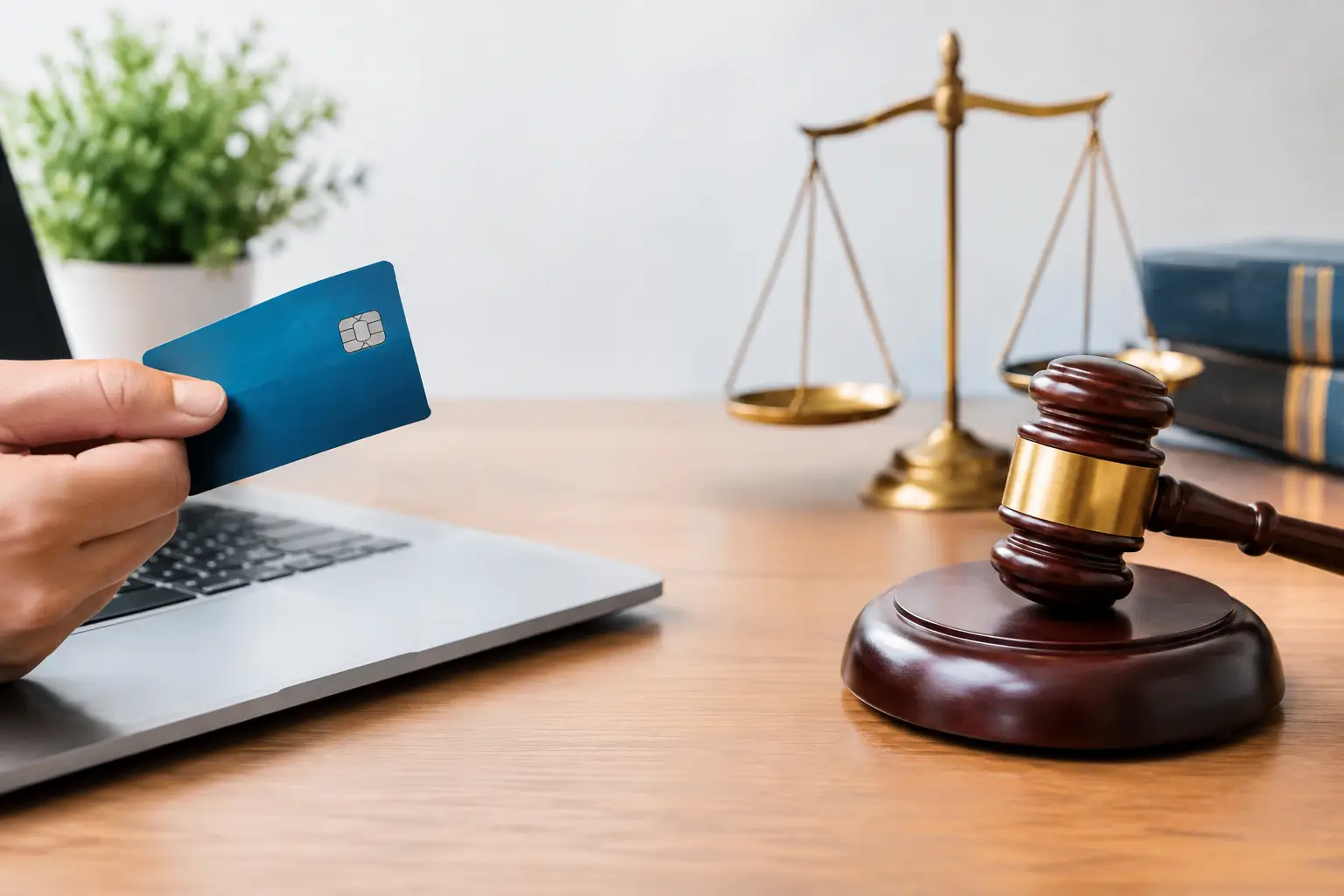
A card purchase goes wrong, the seller stops responding, and your money is still gone. The choice between a chargeback versus small claims court can determine whether you get a quick refund, lose a deadline, or finally force a serious response. These are not interchangeable options. One asks your bank to reverse a card transaction under its network rules. The other asks a judge to decide whether someone legally owes you money.
For many disputes, starting with a chargeback makes sense. For others, it is a dead end or only a temporary win. The right path depends on how you paid, what happened, how much is at stake, and the evidence you can show.
Chargeback versus small claims court: the core difference
A chargeback is a payment dispute. You tell your credit card issuer or bank that a transaction was unauthorized, goods or services were not delivered, an item was materially different from what was promised, or another recognized billing problem occurred. Your card issuer investigates under federal rules and card-network procedures, then may pull the money back from the merchant.
Small claims court is a legal claim. You file against the person or business you believe owes you money. You present your agreement, messages, invoices, photos, receipts, and other proof to a judge. If you win, the court enters a judgment requiring payment.
That difference matters. A chargeback focuses on a particular card transaction. Small claims court can address a broader dispute: unpaid freelance work, a contractor who abandoned a job, a tenant who will not return a deposit, a customer who ignored an invoice, or someone who broke an informal agreement.
When a chargeback is the better first move
Use the chargeback process when the dispute is tied directly to a recent debit or credit card purchase and the problem fits a recognized reason for reversal. Common examples include an online order that never arrived, a duplicate charge, a subscription you properly canceled but kept getting billed for, or a purchase you did not authorize.
Speed is its biggest advantage. You can usually open a dispute by phone, app, or online account, without filing court forms or appearing before a judge. There may be no filing fee, and your card issuer may issue a temporary credit while it investigates.
A chargeback can also create leverage. Merchants often respond faster when their payment processor asks for documentation. If the seller can quickly prove delivery, a valid cancellation policy, or that you accepted the service, though, the bank may side with them.
Do not wait. For certain billing errors on credit cards, federal law generally requires written notice within 60 days after the statement containing the error was sent. Card network and bank deadlines can vary, and debit card protections may be different. Check your account agreement and start the dispute as soon as you identify the problem.
A chargeback is less useful if you paid by cash, check, Zelle, Venmo, ACH transfer, or another method that does not offer a comparable dispute process. It also may not solve disputes where the real question is whether someone performed work properly or breached a contract after a long, complicated project.
When small claims court is the stronger option
Small claims court is built for people who need to enforce an obligation, not merely reverse a purchase. If someone owes you a specific amount and refuses to pay, court may be your most direct path to a legally enforceable result.
Consider small claims court when the other party never paid an invoice, kept a deposit without justification, failed to repay a loan, damaged your property, or accepted payment and did not provide what the agreement required. It is also often the better route after a chargeback was denied for procedural reasons even though your underlying case is strong.
A court case can be more powerful because it results in a judgment. But winning is not exactly the same as collecting. If the defendant does not pay voluntarily, your state may allow collection tools such as wage garnishment, bank levies, or liens, subject to its rules and exemptions. Collection can take time, especially if the defendant has no reachable assets.
Small claims court also has limits. Every state sets a maximum claim amount, and the limit may differ by county or case type. Filing fees, service costs, deadlines, and required forms vary by location. You need the defendant's correct legal name and a valid address for service. Those details are not paperwork trivia. A mistake can delay your case or force you to start again.
Compare the trade-offs before you act
A chargeback is usually cheaper and faster to start, but it is controlled by your financial institution's process. You do not get to explain your story to a judge, and the issuer's decision can depend heavily on transaction records and strict timing rules.
Small claims court requires more effort upfront. You may need to send a demand letter, organize evidence, serve the defendant, file with the right court, and appear at a hearing. In exchange, you get a formal process designed to decide disputed facts and contract obligations.
Think about the size and shape of the dispute. If you are challenging one recent $250 online purchase that never shipped, a chargeback is likely the practical first move. If a client owes your small business $4,000 for completed work, the issue is not a card reversal. It is an unpaid debt, and small claims court may be the right tool.
Also consider what proof you have. Banks tend to look for simple transaction-based evidence: order confirmations, cancellation requests, tracking information, screenshots, and communications with the merchant. Courts can consider those items too, along with contracts, estimates, invoices, witness testimony, photographs, and a timeline that shows exactly what was promised and what went wrong.
Can you use both options?
Sometimes, but do not try to recover the same money twice. You can start with a chargeback and pursue small claims court if the dispute is denied or unresolved. If the chargeback succeeds, the merchant may still challenge the dispute through its own process or claim you owe money under a valid contract.
Be consistent everywhere. Your explanation to the bank, your demand letter, and your court filing should match the facts. Do not call a purchase unauthorized if you made it but are unhappy with the service. Describe the real issue: non-delivery, defective work, a canceled service, an unreturned deposit, or another specific failure.
Before filing suit, tell the other party what you want and why. A clear demand letter should state the amount owed, the basis for the claim, the evidence you have, and a reasonable deadline to pay. Many disputes settle at this stage because the other side realizes you are prepared to follow through.
How to choose your next step
Ask three practical questions. First, did you pay by card, and are you still within the dispute deadline? Second, is the problem a straightforward transaction error or a broader dispute about an agreement? Third, do you have documents that show the amount you are owed and why?
If the answer points to a card dispute, contact your issuer promptly and keep every record you submit. If the answer points to an unpaid obligation, start building a court-ready file now. Save messages in full, collect receipts and invoices, write a dated timeline, and identify the correct person or business to sue.
You do not need a law degree to present a clear small claims case. You need a disciplined record, the right forms, and a simple explanation backed by evidence. Small Claims Genie can help turn that information into a structured case plan and court-ready paperwork tailored to your location.
The strongest move is the one that matches your facts, protects your deadlines, and puts real pressure on the person holding your money. Start documenting today, while the details are still easy to prove.