
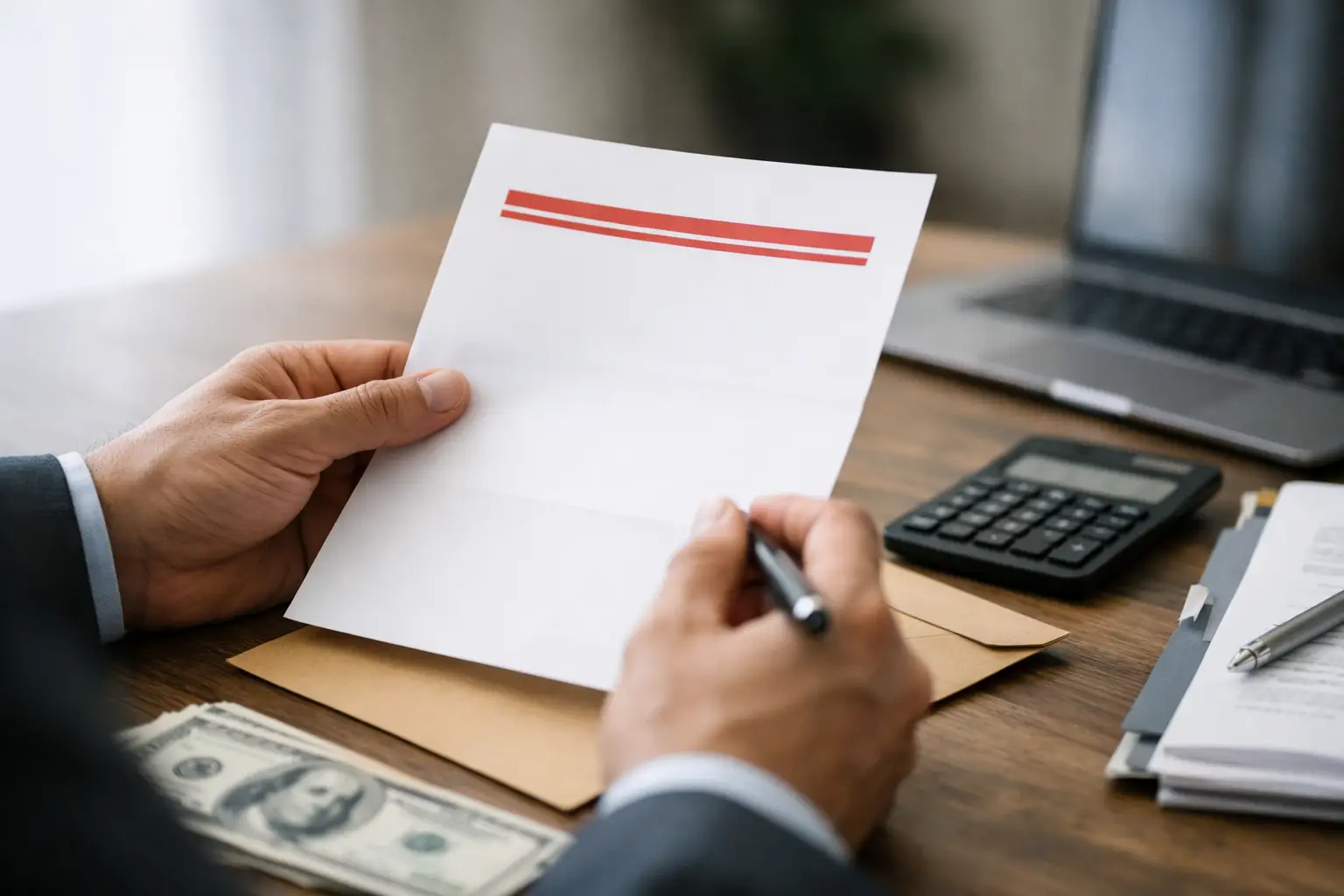
A customer who said, “I’ll send it Friday,” has now gone quiet for three weeks. Or a former friend still owes you for work, a loan, or damaged property and is dodging every message. At this point, learning how to send a final payment notice is not about sounding intimidating. It is about putting a clear deadline, a clear amount, and a clear next step in writing before you decide whether to file in small claims court.
A well-written final notice can prompt payment without court. If it does not, it creates a clean record showing that you tried to resolve the dispute reasonably. That record can matter when you organize your evidence and explain your case to a judge.
What a final payment notice is
A final payment notice is your last written request for payment before you take formal collection action, such as filing a small claims case. It is more direct than a friendly reminder, but it should stay factual and professional.
This is not the place for insults, threats, or a long replay of every disagreement. Your goal is simple: identify the debt, give the person a final deadline to pay, explain what you will do if they do not, and preserve proof that you gave them notice.
For many unpaid invoice, service, loan, and property-damage disputes, a final notice is the practical bridge between asking for your money and taking action to recover it.
Send the notice when the debt is actually due
Do not send a “final” notice too early. If an invoice says payment is due in 30 days, wait until those 30 days have passed. If you made a verbal agreement, use the payment date you both discussed. If there was no exact due date, you may first need to give the other person a reasonable opportunity to pay.
Usually, a final notice makes sense after you have already made at least one ordinary request. That could be an invoice, a text, an email, or a reminder call. Keep copies of those earlier communications.
There are exceptions. If the other person has clearly refused to pay, blocked you, or repeatedly broken promised payment dates, you may be ready to send a final notice sooner. The key is that your timeline should look fair and reasonable if someone else later reviews it.
Include the facts they cannot reasonably dispute
A final payment notice works best when the reader can understand it in under a minute. Avoid vague statements such as “You know what you owe me.” State the amount and why it is owed.
Your notice should include these essential details:
- Your name, address, phone number, and email, along with the recipient’s name and current address.
- The exact amount due and the date it became due.
- A short description of the debt, such as an unpaid invoice, personal loan, repair bill, security deposit, or cost of damaged property.
- Any relevant agreement, invoice number, service date, or prior payment promise.
- A firm payment deadline and clear payment instructions.
- A direct statement that you may file a claim in small claims court if payment is not received.
If you are claiming extra charges, such as late fees, interest, or collection costs, be careful. Only include them if your written agreement or applicable law allows them. Adding made-up penalties can weaken an otherwise solid demand.
Set a deadline that is firm but reasonable
A final payment deadline should create urgency without looking unreasonable. In many situations, seven to 14 calendar days is a sensible window. The right deadline depends on the facts.
Seven days may be appropriate when the person already promised to pay, the amount is clear, and you have been waiting for a while. Fourteen days may make more sense for a larger balance, a dispute involving paperwork, or a recipient who needs time to review the request.
Use an actual date, not “within a week.” For example: “Payment in full must be received by May 15, 2026.” A specific date is harder to misunderstand and easier to prove later.
Also explain how payment can be made. If you accept a check, electronic transfer, payment app, or another method, say so. Do not give the other person an excuse to claim they did not know how to pay you.
Use direct language, not empty threats
The strongest notices are calm. You do not need to use legal-sounding phrases to be taken seriously. You do need to say what will happen next.
Here is a plain-English structure you can adapt:
> Final Payment Notice > > Date: [Date] > > [Recipient Name], > > You owe me $[amount] for [brief description of goods, services, loan, or damage]. Payment was due on [due date]. I previously requested payment on [date or dates], but the balance remains unpaid. > > Please pay the full amount of $[amount] by [specific deadline date]. Payment can be made by [payment method and instructions]. > > If I do not receive payment by that date, I may file a claim against you in small claims court without further notice. I would prefer to resolve this directly and avoid court costs and additional time for both of us. > > Sincerely, > > [Your Name]
Only say you may file if you are prepared to follow through. A deadline that passes with no action teaches the other person that they can keep ignoring you. If you need more time to prepare, do not promise an immediate filing date you cannot meet.
Send it in a way you can prove
A final payment notice is more useful when you can show it was sent. Email and text can be helpful because they create timestamps and may show delivery or a response. But they are not always enough on their own, especially if you do not have a reliable current email address.
For a stronger paper trail, send the notice by certified mail with a return receipt or another trackable mailing method. Save the mailing receipt, tracking history, a copy of the letter, and any signed delivery confirmation. If the recipient refuses delivery or does not pick up the mail, keep that evidence too.
It is often smart to send the notice more than one way: by certified mail and email, for example. That does not mean you should harass the person with repeated messages. It means you are making a reasonable effort to ensure they receive it.
If you are dealing with a business, confirm the correct legal business name and address before sending anything. A storefront name is not always the entity you would need to sue. Check invoices, contracts, receipts, and public business records where available.
Keep the notice separate from emotion
Unpaid money is personal. You may have spent hours doing work, covered expenses you could not afford, or trusted someone who took advantage of you. None of that means you have to write an emotional letter.
Avoid accusations of fraud, theft, or criminal conduct unless you have a clear legal basis and understand the consequences of making those claims. Small claims court generally handles civil money disputes. Your strongest position is usually the simplest one: an agreement existed, you did what you promised, payment became due, and the other party did not pay.
Do not threaten public shaming, contact someone’s employer, post online reviews as leverage, or make threats you cannot legally carry out. Those tactics can turn a straightforward collection dispute into a bigger problem.
If they offer a payment plan
A partial payment is not always a win if it comes with another vague promise. If the person cannot pay in full, decide whether a written payment plan is worth accepting.
Get the plan in writing. State the total balance, each installment amount, the due date for every payment, the payment method, and what happens if a payment is missed. Do not assume a friendly text exchange will be clear enough later.
It depends on the person and the amount involved. A payment plan can save time and filing fees when the other party is acting in good faith. But if they have already missed multiple promises, a short final deadline followed by a small claims filing may be the more practical route.
Prepare for small claims court before the deadline expires
Do not wait until the day after your final deadline to start gathering proof. Organize the documents that show why the money is owed: the contract or messages showing the agreement, invoices, receipts, photographs, proof you performed the work, payment records, and every message about the unpaid balance.
Make a simple timeline. Start with the agreement, then list what you provided, when payment was due, each reminder you sent, the final notice, and any response. A clear timeline helps you spot missing evidence before you file.
Court rules, filing limits, deadlines, and required forms vary by state and county. That is where preparation matters. Small Claims Genie can help you turn your documents and timeline into a structured case, understand what evidence supports your claim, and prepare court-ready forms for your local court.
Take the next step with confidence
A final payment notice gives the other person one fair opportunity to pay. It also gives you a decision point. If they pay, get the payment confirmed and close the matter. If they ignore the deadline or refuse a reasonable solution, stop chasing and start preparing your claim.
You do not need a lawyer to take a clear, well-documented unpaid debt seriously. You need the facts, the evidence, and a plan to follow through.