
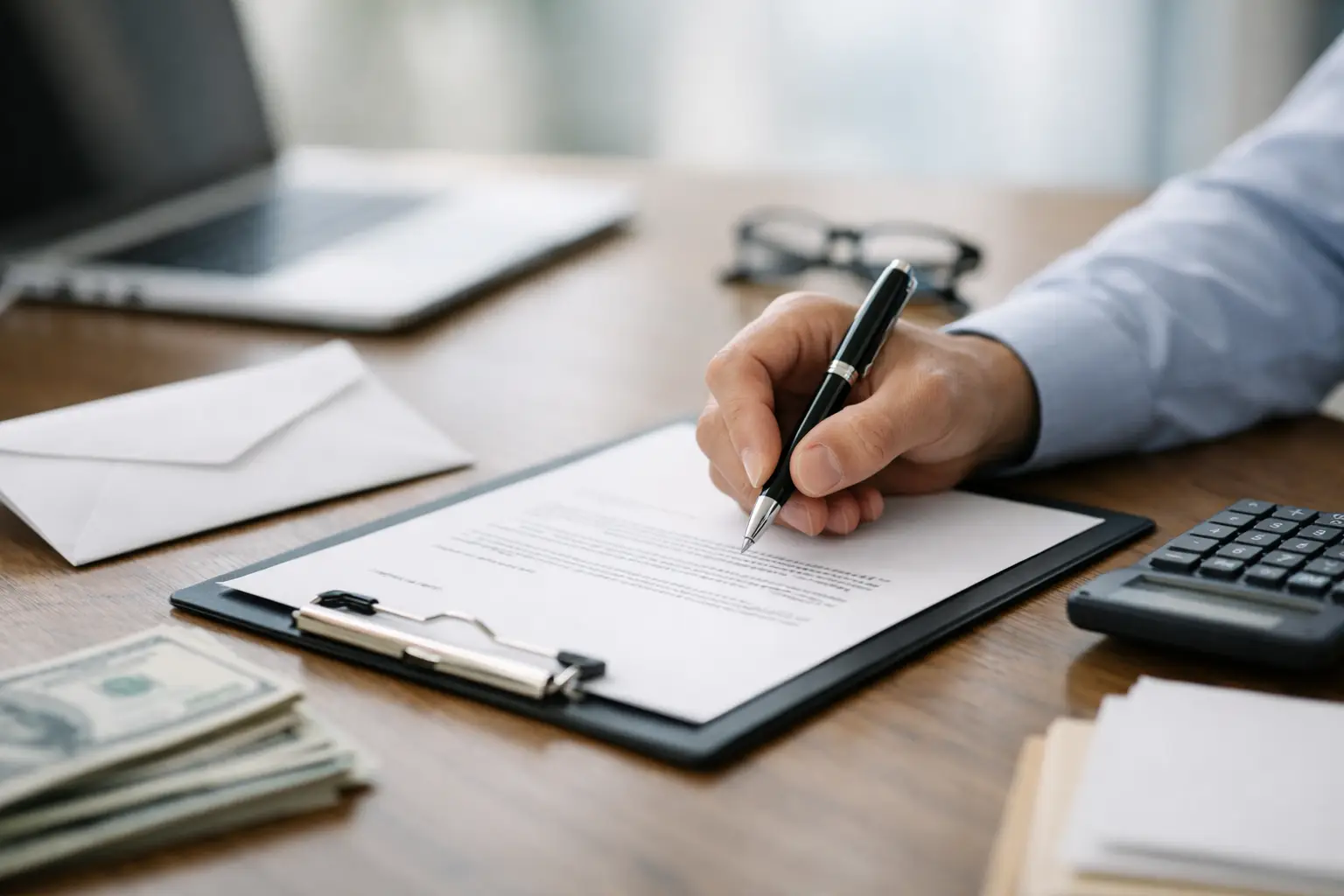
Someone owes you money, your messages have gone unanswered, and you are tired of asking nicely. Learning how to write a payment demand letter gives you a clear next move: put the debt in writing, set a deadline, and show that you are prepared to enforce your rights if payment does not arrive.
A demand letter is not a rant, a threat, or a complicated legal document. It is a factual written request for payment. Done well, it can prompt a settlement without court. If it does not, it creates a clean record showing that you gave the other person a fair opportunity to resolve the problem.
What a payment demand letter does
A payment demand letter tells the recipient exactly what they owe, why they owe it, and when they need to pay. It also explains what you plan to do if they ignore the deadline, such as filing a claim in small claims court.
For many unpaid invoices, personal loans, deposits, repair disputes, and informal agreements, a firm letter is enough to get a response. People often delay because they believe there will be no consequence. A written demand changes that calculation.
It also helps you prepare if court becomes necessary. Judges generally want to see that you tried to resolve the dispute before filing. Your letter, proof of delivery, and any response can become useful evidence.
A demand letter cannot create a debt that does not exist. You still need facts and evidence showing there was an agreement or legal obligation to pay. Keep your letter honest, specific, and tied to documents you can support.
Gather the facts before you write
Do not write from memory when money and dates are involved. Pull together the agreement, invoice, receipts, messages, photos, canceled checks, payment records, and any prior requests for payment. You do not need to attach every document to the first letter, but you need to know what proves your position.
Confirm the basics: the recipient’s full legal name, their current mailing address, the total amount due, the date payment became due, and the reason for the debt. If the amount includes late fees or interest, include them only if your agreement or applicable law allows them. Do not add arbitrary penalties just to make the letter sound tougher.
If the dispute involves partial payments, show the math. For example, if an invoice was $1,200 and the customer paid $400, state that the remaining balance is $800. A number the recipient can verify is harder to dismiss.
How to write a payment demand letter in 5 steps
1. Start with the date, names, and a clear subject line
Put the date at the top. Include your name and address, then the recipient’s name and address. Use a direct subject line such as: “Re: Demand for Payment of $850.”
This is not just formatting. It makes the letter easy to identify later and reduces confusion about who is making the demand and which debt is involved.
2. State the debt in plain English
In the first paragraph, explain the transaction or agreement. Include the date, what was provided or promised, and the amount owed. Keep it short and factual.
For example: “On March 5, 2026, you agreed to pay me $850 for moving services completed at your apartment. The services were completed on March 7, 2026. Payment was due on March 14, 2026, and no payment has been received.”
Avoid emotional details, accusations, or a long history of every frustrating conversation. You may be angry, and reasonably so. But a demand letter is more effective when it reads like someone who knows the facts and is ready to prove them.
3. Demand a specific amount and payment method
State the exact amount you are demanding. If you are seeking reimbursement for a damaged item or unpaid work, briefly show how you reached that total. If there are credits or partial payments, subtract them clearly.
Then tell the recipient how they can pay. You might provide a mailing address for a check, a payment app handle, or instructions to contact you to arrange an electronic payment. Only offer payment methods you are comfortable using, and keep records of any payment received.
If you are open to a payment plan, you can say so. That decision depends on your situation. A payment plan may get money moving faster, but it can also delay a court filing if the person misses future installments. If you agree to one, get the terms in writing.
4. Set a reasonable, firm deadline
Give a clear calendar deadline, not “as soon as possible.” For many straightforward debts, 10 to 14 days from the date of the letter is reasonable. If the matter is urgent or the recipient has already had repeated chances to pay, a shorter deadline may make sense.
Write the date in full: “Payment must be received by April 18, 2026.” Say what happens if payment is not received by then. Keep the language accurate: “If I do not receive payment by this date, I may file a claim in small claims court to recover the amount owed, court costs, and any other relief allowed by law.”
Do not threaten criminal charges, public embarrassment, immigration consequences, or actions you cannot legally take. A demand letter should apply pressure through a credible legal next step, not intimidation.
5. Close professionally and preserve proof of delivery
Ask the recipient to contact you if they believe the amount is incorrect or want to discuss resolution. Sign the letter and keep a copy for yourself.
Send it in a way you can document. Certified mail with return receipt is often useful because it creates a mailing record. Depending on the situation, you may also send a copy by email or text, especially if that is how you normally communicate. Keep screenshots, delivery confirmations, and any replies.
Proof that you sent the letter matters even if the person refuses to respond. It shows you made a serious, documented attempt to settle before escalating the case.
A simple payment demand letter template
Use this structure and replace the brackets with your facts:
> [Date] > > [Recipient Name] > [Recipient Address] > > Re: Demand for Payment of $[Amount] > > On [date], you agreed to pay $[amount] for [goods, services, loan, deposit, or other obligation]. [Briefly state what happened and when payment was due.] As of the date of this letter, you owe $[total amount due]. > > Please pay the full amount of $[total amount due] by [full deadline date]. Payment may be made by [payment instructions]. > > If I do not receive payment by that date, I may file a claim in small claims court seeking the amount owed, court costs, and any other relief allowed by law. This letter is an effort to resolve this matter without court. > > If you believe this amount is incorrect or would like to discuss resolution, contact me at [phone number or email] before the deadline. > > Sincerely, > > [Your Name]
The template is intentionally simple. Adding legal-sounding phrases does not make your claim stronger. Accurate dates, a clear amount, and supporting evidence do.
Common mistakes that weaken a demand letter
The biggest mistake is demanding an amount you cannot explain. If you ask for $2,000 but your invoices, messages, or receipts support only $1,400, the recipient may stop taking the letter seriously. A court may also question your credibility later.
Another common mistake is sending a vague letter that says only, “You owe me money.” Identify the agreement, the date, the work or item involved, and the unpaid balance. The recipient should understand exactly what they need to do to resolve the dispute.
Do not wait so long that you risk missing your state’s deadline to sue, known as the statute of limitations. The deadline varies by state and by the type of claim. A demand letter can help resolve a case, but sending one does not always pause the clock for filing a lawsuit.
Finally, do not treat a demand letter as a substitute for preparation. If the deadline passes, be ready to organize your evidence, identify the correct defendant, calculate your claim, and file in the right court. Small Claims Genie can help turn that next step into a guided, court-ready process.
A strong demand letter gives the other side one fair chance to pay. Send it with confidence, keep your records, and if they still choose not to resolve the debt, move forward with the proof you have built.