
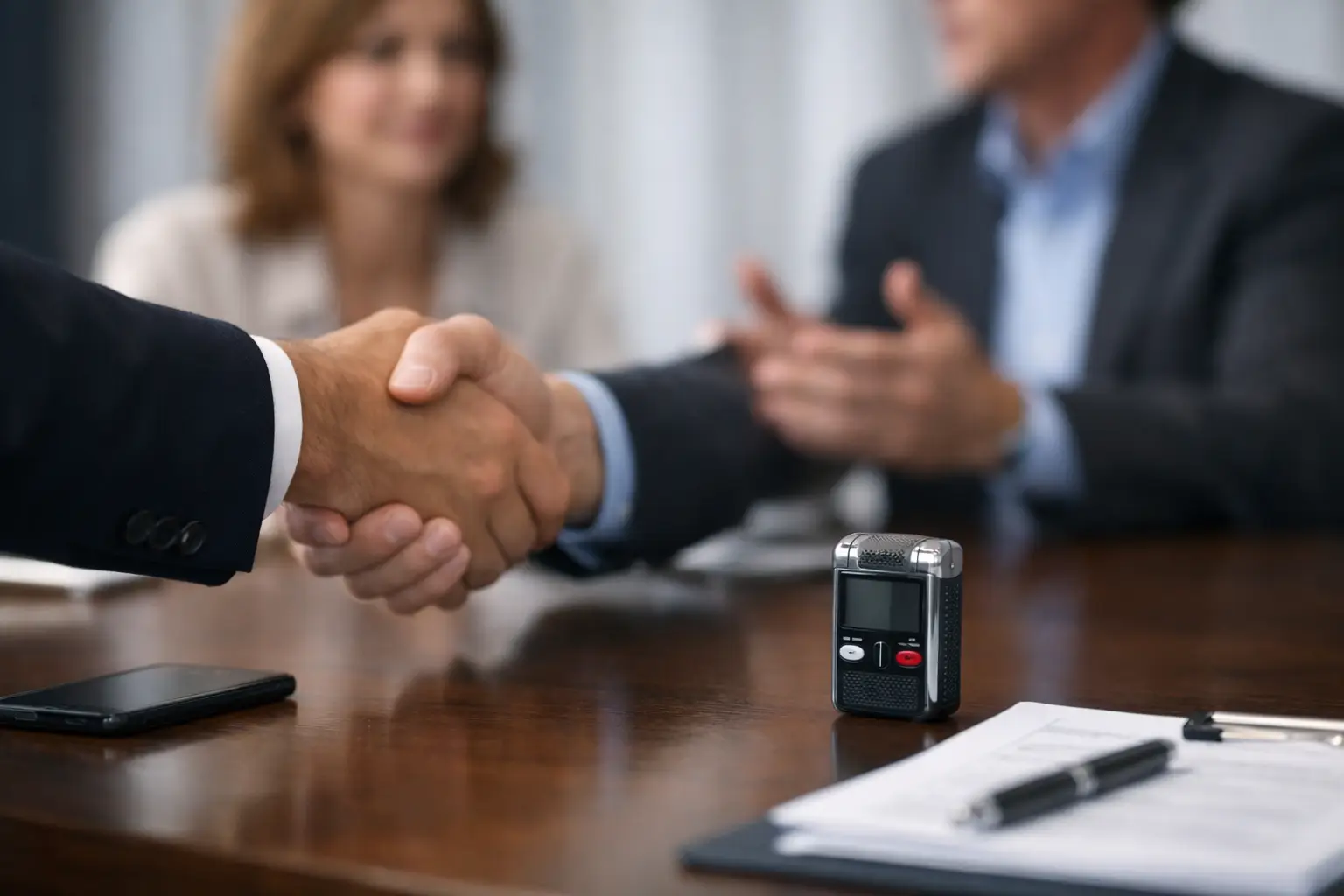
A handshake agreement can be real. A verbal promise to pay can be enforceable. But when the other person denies the deal, oral contract proof becomes the difference between a frustrating story and a case a judge can act on.
Small claims court does not require a stack of formal legal documents for every dispute. It does require credible evidence. Your job is to show the judge what was agreed, what you did, what the other person failed to do, and how much that failure cost you.
Can You Enforce an Oral Contract?
In many situations, yes. Oral contracts are generally enforceable in the United States when the parties reached an actual agreement. That usually means one person offered something, the other accepted, both sides exchanged something of value, and the important terms were clear enough to follow.
For example, a homeowner agrees to pay a painter $1,800 to paint two rooms. The painter completes the work. The homeowner pays $500, then stops responding. Even if nobody signed a written contract, the agreement may still be enforceable.
The hard part is proof. A judge was not present for your phone call, driveway conversation, or handshake. You need evidence that fills that gap.
There are exceptions. State law may require certain agreements to be in writing, especially agreements involving real estate, promises that cannot be performed within a year, or certain sales and debt arrangements. Court rules and claim limits also vary by state and county. Still, do not assume you have no case simply because there was no signed contract. Review the facts before giving up money you are owed.
What Oral Contract Proof Must Show
You do not need to prove every word of the conversation. You need to prove the terms that matter to your claim. In a typical unpaid debt case, that means showing five basic points: there was an agreement, you performed your side or were ready to perform it, the other party failed to pay or otherwise breached the deal, you suffered a financial loss, and the amount you seek is reasonable.
A clear story might sound like this: “On March 3, we agreed I would repair the fence for $2,400. I sent a text confirming the price and start date. I completed the repair on March 10. The customer said the work looked good and paid $1,000. They still owe $1,400 despite my written requests.”
That is much stronger than saying, “They promised to pay me.” Specific dates, work performed, agreed price, partial payments, and follow-up messages give the court something concrete to evaluate.
The Evidence That Makes Verbal Agreements Believable
The best evidence is often created after the verbal agreement. People confirm plans by text, send payment apps, exchange invoices, and discuss what went wrong. Those records can support the original conversation even if they do not repeat every term.
Look for these four types of evidence:
- Messages and emails: Texts such as “I’ll send the remaining $600 Friday,” “Can you finish the job next week?” or “Thanks for doing the repair” can show an agreement, performance, or an unpaid balance.
- Payment records: Venmo, Zelle, Cash App, bank transfers, canceled checks, receipts, and partial payments can show that the other person recognized an obligation.
- Work and delivery records: Photos, invoices, estimates, calendar entries, delivery confirmations, work orders, and before-and-after pictures help prove you did what you promised.
- Witness testimony: A person who heard the agreement or saw the work can testify to what they personally observed.
No single item has to carry your entire case. Several ordinary records that point in the same direction can be very persuasive. A text confirming the price, photos of completed work, a partial payment, and a demand letter with no real denial can form a solid chain of proof.
A Partial Payment Can Matter a Lot
If someone pays part of the agreed amount, that can be powerful oral contract proof. It may show they accepted the service, product, or loan and understood that money was owed.
It is not automatic proof of every disputed term. The other side may claim the payment was a gift, a deposit for a different arrangement, or full payment. That is why context matters. Save the payment note, the related messages, your invoice, and any follow-up where you asked for the remaining balance.
Build a Timeline Before You File
A judge should be able to understand your case quickly. The easiest way to make that happen is to organize your evidence in date order. Do not hand over an unfiltered phone full of screenshots and expect the court to assemble your argument.
Start with the date of the agreement. Then list when you performed, delivered, paid money, sent invoices, received partial payment, and demanded payment. Put the amount connected to each event beside it.
For instance, your timeline may show that you agreed to lend $900 on April 2, transferred the money that day, received a text on April 15 promising repayment by May 1, and sent three unanswered requests after the deadline. That sequence tells the story without unnecessary drama.
Create a simple evidence packet that follows the same order. Label documents clearly: Exhibit 1, Exhibit 2, Exhibit 3. Include only records that prove a point. If a screenshot is important, make sure it shows the sender, recipient, date, and full message context when possible.
Make Your Digital Evidence Easy to Trust
Texts are useful, but screenshots can raise questions when they are incomplete or hard to identify. Preserve the original conversation on your phone. Take screenshots that include contact information and dates, then export or print the full relevant message thread if you can.
Do not edit messages, crop out context that changes their meaning, or alter records to make them look stronger. A small inconsistency can damage your credibility far more than an imperfect document would.
For emails, print the message with the sender, recipient, date, and subject line visible. For payment-app records, capture the transaction date, amount, name or account identifier, and payment memo. For photos, use the original files when available and be ready to explain when and where you took them.
If the other person admits the agreement in a voicemail, message, or email, preserve it immediately. Do not rely on a disappearing message, a social media account, or a payment-app history remaining available forever.
Use Witnesses Carefully
A witness can help when they personally heard the agreement, saw you provide the service, watched the item get delivered, or heard the other party acknowledge the debt. A neutral witness is often especially credible.
What a witness should not do is repeat rumors. “My friend told me she was owed money” is weak because the friend did not personally observe the deal. A witness who heard the customer say, “I will pay the rest next week,” is much more useful.
Before court, ask each witness what they actually saw or heard. Keep their testimony focused. They should explain facts, not argue your case or guess at legal conclusions.
Watch for Proof Problems That Can Hurt Your Claim
Some evidence creates risk if you use it carelessly. Recording conversations may be restricted by state consent laws. In some states, all parties must consent to recording. Do not secretly record calls without understanding the law where the conversation occurred.
Also be precise about the agreement. If the price was never settled, the scope of work changed repeatedly, or the other party claims defective work, expect questions. Bring proof of the reasonable value of your work, your attempts to fix legitimate issues, and any messages showing approval or acceptance.
If you are claiming damages beyond an unpaid invoice, document how you calculated them. Small claims judges want a number supported by receipts, estimates, invoices, or a straightforward explanation. Asking for a round number because the situation was unfair is unlikely to help.
Send a Clear Demand Before Filing
A demand letter gives the other party one final chance to pay and shows the court that you tried to resolve the matter reasonably. State the agreement, the amount owed, the due date, and a firm payment deadline. Attach or reference the key records if that makes the request clearer.
Keep the tone factual. Do not threaten, insult, or make claims you cannot prove. A calm demand letter can also produce more oral contract proof: the other person may respond with an excuse that accidentally confirms the debt, such as “I need another two weeks” or “I thought the balance was lower.”
If payment still does not arrive, bring your timeline, evidence packet, and a short explanation to court. Small Claims Genie can help you organize case facts, identify supporting evidence, prepare a demand letter, and generate court-ready forms for your location.
You do not need a perfect signed contract to stand up for yourself. You need a clear, honest record that lets the judge see the agreement and the unpaid balance. Start preserving that record now, before another message disappears or another promised payment date passes.